Whitewashed façades, colourful flowerpots, a seafront promenade and a marina all contribute to the town's character. But Estepona has much more to offer than attractive surroundings: from historic landmarks and public art to remarkable natural landscapes and local traditions.
What makes Estepona special? What is everyday life like, which areas are there to explore and who might enjoy living here? In this guide, discover what sets Estepona apart from other destinations on the Costa del Sol.
A historic old town full of Andalusian character
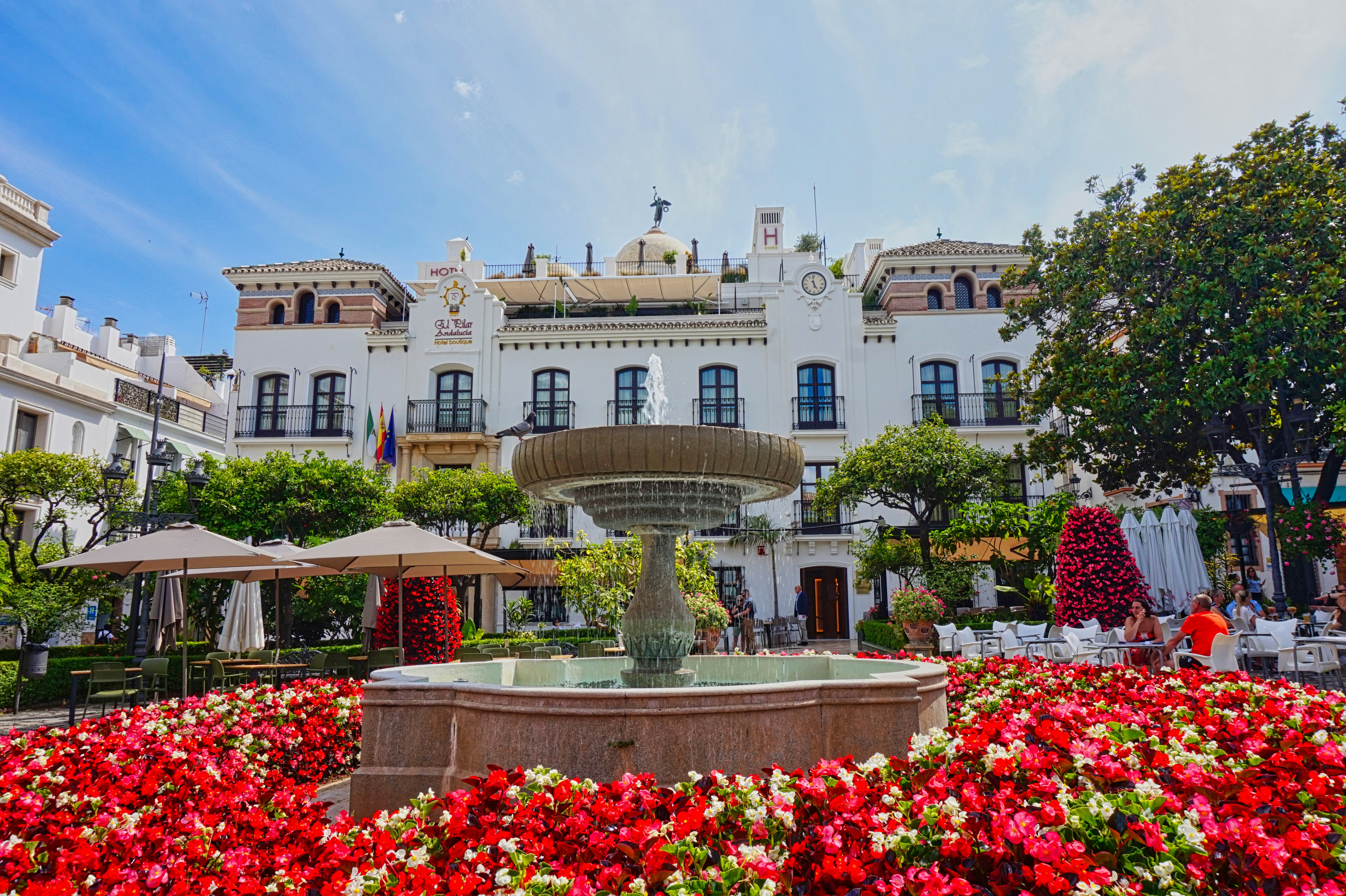
The historic old town is one of Estepona's most recognisable areas. Narrow streets, whitewashed façades, small squares and colourful flowerpots create a typically Andalusian setting. One of its main meeting places is Plaza de las Flores, literally meaning 'Flower Square', where outdoor terraces and historic buildings come together.
Estepona is nicknamed Jardín de la Costa del Sol, meaning 'Garden of the Costa del Sol'. The name refers to the abundance of flowers and plants decorating its streets. More than 130 streets in the old town have been renovated and adorned with colourful flowerpots. The town also has several parks and landscaped squares, so its green character extends beyond the historic centre.
A walk through the old town takes you past small shops, restaurants, churches and welcoming squares. Many streets are pedestrianised or have restricted traffic, making much of the historic centre pleasant to explore on foot. For those who enjoy being close to the shops and everyday activity, this offers a very different environment from the residential areas further along the coast.
Beaches, the seafront promenade and marina
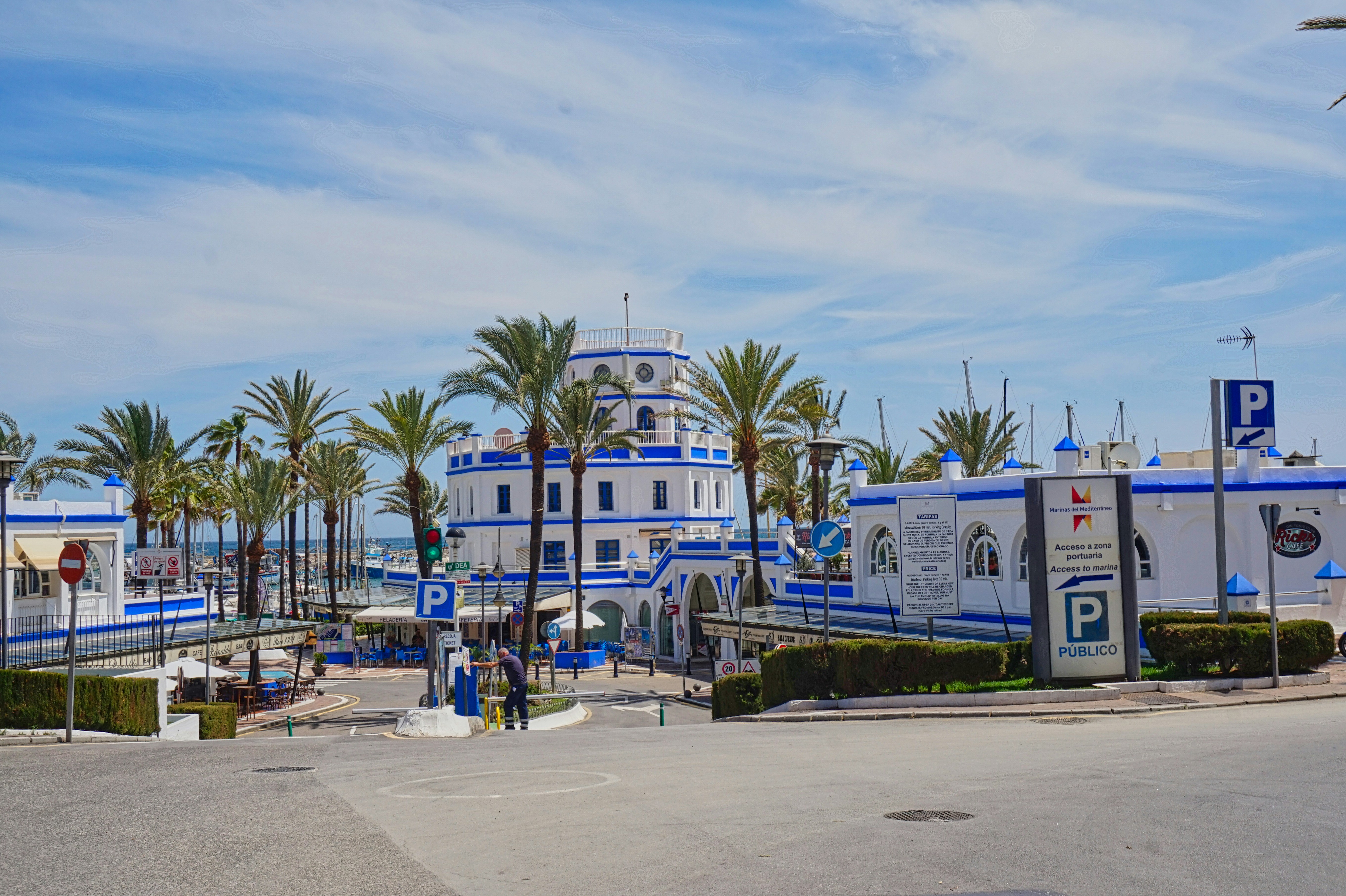
Estepona has more than 20 kilometres of coastline, with both urban beaches and others further from the town centre. The best known is Playa de la Rada, an approximately three-kilometre-long beach directly alongside the town. Running beside it is the Paseo Marítimo, the seafront promenade, lined with palm trees, terraces and various access points to the sandy beach.
To the west of the centre lies Playa del Cristo, a beach in a sheltered bay near the marina. Thanks to the shape of the bay, the water is often calmer here than at more exposed beaches. Further along the coastline are beaches such as El Padrón, El Saladillo, Guadalmansa and Atalaya, each with its own setting and facilities.
The Puerto Deportivo, Estepona's marina, is another distinctive part of coastal life. Pleasure boats are moored here, alongside restaurants and terraces. Estepona also has a fishing harbour, reflecting the town's maritime heritage.
Those who enjoy walking or cycling by the sea can also explore sections of the Senda Litoral, or Coastal Path. This route forms part of a wider project connecting coastal municipalities across the province of Málaga. It offers another way to discover the beaches and coastal scenery away from the main roads.
Attractions and nature in Estepona
Estepona has several landmarks that reveal more about its history. In the centre stands the Torre del Reloj, literally the 'Clock Tower'. It originally formed part of a 16th-century church. After the church was severely damaged by the earthquake of 1755, it was demolished, but the tower remained. A sundial can still be seen on its southern side. The remains of Castillo de San Luis also recall the town's former coastal defences. A very different attraction is the Parque Botánico-Orquidario, a botanical garden housing orchids in a subtropical environment within a striking building topped by glass domes.
Art also has a prominent place in the streets. Along the Ruta de los Murales, or 'Mural Route', visitors can discover large paintings on building façades across different neighbourhoods. Some artworks extend over several storeys. There is also a Ruta de la Poesía, or 'Poetry Route', featuring poems displayed on ceramic plaques in different languages. In this way, Estepona has transformed parts of the town into an open-air museum that can be explored during an ordinary walk.
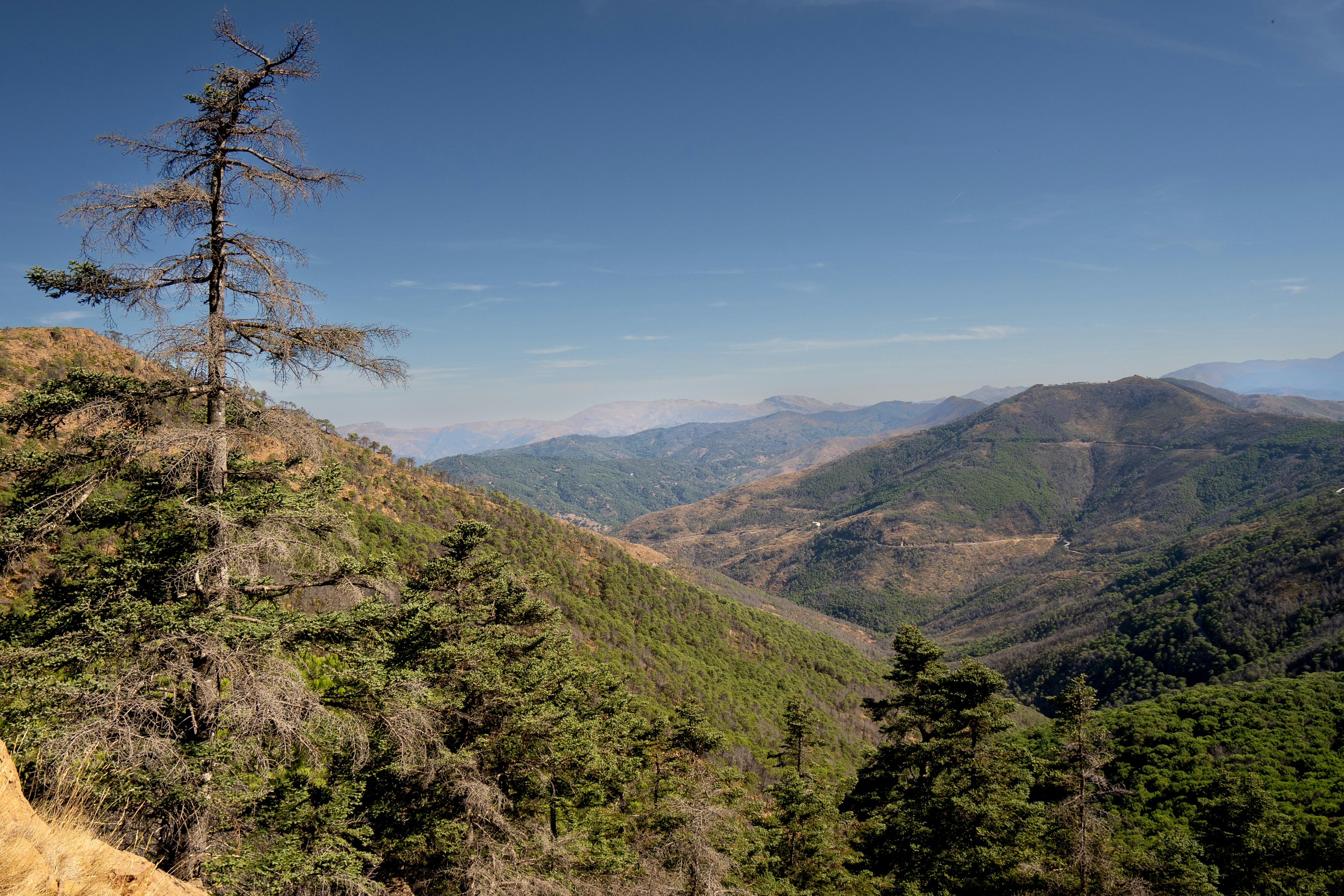
Behind the coastline rises Sierra Bermeja, the mountain range that gives Estepona its distinctive backdrop. The word bermeja refers to the reddish colour of the rock. The mountains are known for their unusual vegetation, including the Spanish fir, or pinsapo, a rare species of fir that grows naturally in certain mountainous areas of southern Spain. There are opportunities for walking and enjoying the mountain scenery around Estepona. Golf enthusiasts will also find several courses in the wider area, including Estepona Golf, El Paraíso Golf and Atalaya Golf.
Living in Estepona: what are the different areas?
Estepona is much more than its historic town centre. The municipality stretches along a considerable section of coastline and includes different neighbourhoods, residential developments and smaller communities. The surrounding environment can therefore vary significantly depending on the location.
In the historic centre and surrounding urban neighbourhoods, there are numerous shops, restaurants and everyday amenities. The beach and seafront promenade are also within walking distance of various parts of the town. This makes the area appealing to those who enjoy everyday town life without needing a car for every journey.
West of the centre, towards areas such as Arroyo Vaquero and Bahía Dorada, the landscape gradually changes. Here, there are residential developments close to the coast as well as locations further inland. The distance to shops, restaurants and other amenities varies from one neighbourhood to another.
East of the centre lies the area commonly known as the New Golden Mile. This is not a single neighbourhood but a name used for an extensive stretch of coastline towards Marbella. It includes hotels, residential developments and golf courses. Names such as Cancelada, El Paraíso and Atalaya frequently come up in this part of the municipality.
It is important not to treat all these areas as though they were the same. Some neighbourhoods have their own shops, restaurants and amenities within walking distance. Others are more spread out, making a car more practical. Anyone considering Estepona as a place to live should therefore get to know not just the municipality, but the specific neighbourhood as well.
Everyday life, gastronomy and climate
Estepona is a town where everyday life does not revolve exclusively around tourism. It has a year-round population, with schools, shops, healthcare services, sports facilities and other amenities. In the centre, squares, shopping streets and outdoor terraces contribute to a lively atmosphere even outside the busiest summer months.
Local gastronomy is closely linked to Andalusia's coastal traditions. Fresh fish and seafood play an important role, alongside tapas and rice dishes. One typical speciality of the Málaga coast is espetos de sardinas: sardines threaded onto skewers and grilled over charcoal, often served at beach restaurants known as chiringuitos. The international character of the Costa del Sol is also reflected in a wide variety of cuisines from other countries.
The Mediterranean climate brings warm summers and generally mild winters. However, there are clear seasonal differences. In summer, shade on a terrace can be particularly welcome, while in winter a sunny position may be an advantage. A property's orientation in relation to the sea, mountains and neighbouring buildings can also affect how much sun and wind it receives.
For those planning to spend extended periods in Estepona, it can be worthwhile experiencing the town at different times of year. The atmosphere on the beaches, activity in the centre and use of outdoor spaces change with the seasons, while everyday town life continues.
Accessibility and getting around
Estepona is located on the western Costa del Sol and is connected by the A-7 and AP-7 to Marbella, Málaga and municipalities further west. Málaga-Costa del Sol Airport is approximately 80 to 85 kilometres by road from the town centre, depending on the route taken.
The town has bus connections but no railway station of its own. Travelling by public transport therefore requires using buses or combining different forms of transport for certain journeys.
Within Estepona, the ease of getting around on foot or by bicycle depends largely on the neighbourhood. In the centre and several surrounding urban areas, many amenities are relatively close together. Some other residential areas also have shops and restaurants within walking distance. For those who regularly travel between different parts of the municipality, having a car can be useful.
Is Estepona right for you?
Estepona may be an appealing choice for those who enjoy living by the Mediterranean while also valuing the amenities and everyday activity of an established town. The historic centre, seafront promenade, beaches and wide range of restaurants and shops make it possible to combine coastal living with an ordinary daily routine.
Those who prefer to live outside the town centre will also find a variety of settings across the municipality. Some neighbourhoods have amenities within walking distance, while others are quieter or more spread out. The proximity of Sierra Bermeja and the area's golf courses also provides options for those who enjoy outdoor activities.
Estepona may be less suitable for those who rely heavily on rail connections or wish to travel exclusively by public transport. Anyone hoping to reach all everyday amenities without a car should also pay close attention to the exact location. This is certainly possible in some areas, but not automatically in every neighbourhood.
The choice therefore depends mainly on the kind of environment you are looking for: a lively town centre, a neighbourhood with nearby amenities or a more spread-out residential area. These differences can be considerable within Estepona itself.
Frequently asked questions about Estepona
Is Estepona a good place to live?
Estepona can be a pleasant place to live for those who want to combine life by the sea with shops, restaurants, schools and other everyday amenities. The town has a permanent population and is not geared exclusively towards holidaymakers. The most suitable neighbourhood will depend on your preferences regarding peace and quiet, atmosphere, accessibility and proximity to amenities.
What is Estepona known for?
Estepona is particularly well known for its flower-filled historic old town, long coastline and seafront promenade. It is also nicknamed Jardín de la Costa del Sol, meaning 'Garden of the Costa del Sol', because of the many flowers and plants decorating its streets.
What is the Estepona Orchidarium?
The Orchidarium is a botanical garden in the centre of Estepona, housing a large collection of orchids from different parts of the world. The building is recognisable by its glass domes and also features an indoor waterfall.
Does Estepona have a historic castle?
Yes. The historic centre contains the remains of Castillo de San Luis, a 16th-century fortress built to defend the coast. Today, visitors can see the historic remains rather than a fully preserved castle.
Does Estepona have good beaches?
Estepona has several beaches, including Playa de la Rada, directly beside the town centre, and Playa del Cristo, located in a sheltered bay near the marina. There are also other beaches along the coastline, each with its own surroundings and character.
What is Sierra Bermeja?
Sierra Bermeja is the mountain range behind Estepona. Its name refers to the reddish colour of the rocks. The area is known for its distinctive natural environment, including the rare Spanish fir, and offers opportunities for walking and hiking.
How far is Estepona from Málaga Airport?
Málaga-Costa del Sol Airport is approximately 80 to 85 kilometres by road from central Estepona. The exact distance and journey time depend on the route taken and your destination within the municipality.
Thinking of buying or selling property in Estepona?
At NB-ESTATES, we provide personal guidance when buying or selling property in Spain. We take the time to understand your requirements and help you explore different regions and residential areas so that you can make a well-informed decision.
With offices in Belgium and Spain and our own colleagues on the ground, you can rely on personal support and a dedicated point of contact throughout the process. An initial meeting can take place at one of our offices, at your home or via video call.
Email: sales@nbestates.com
Telephone: +32 3 304 72 42