
Monday, February 23, 2026
nieuws
Torrevieja Port Redevelopment and Urban Renewal on Costa Blanca South
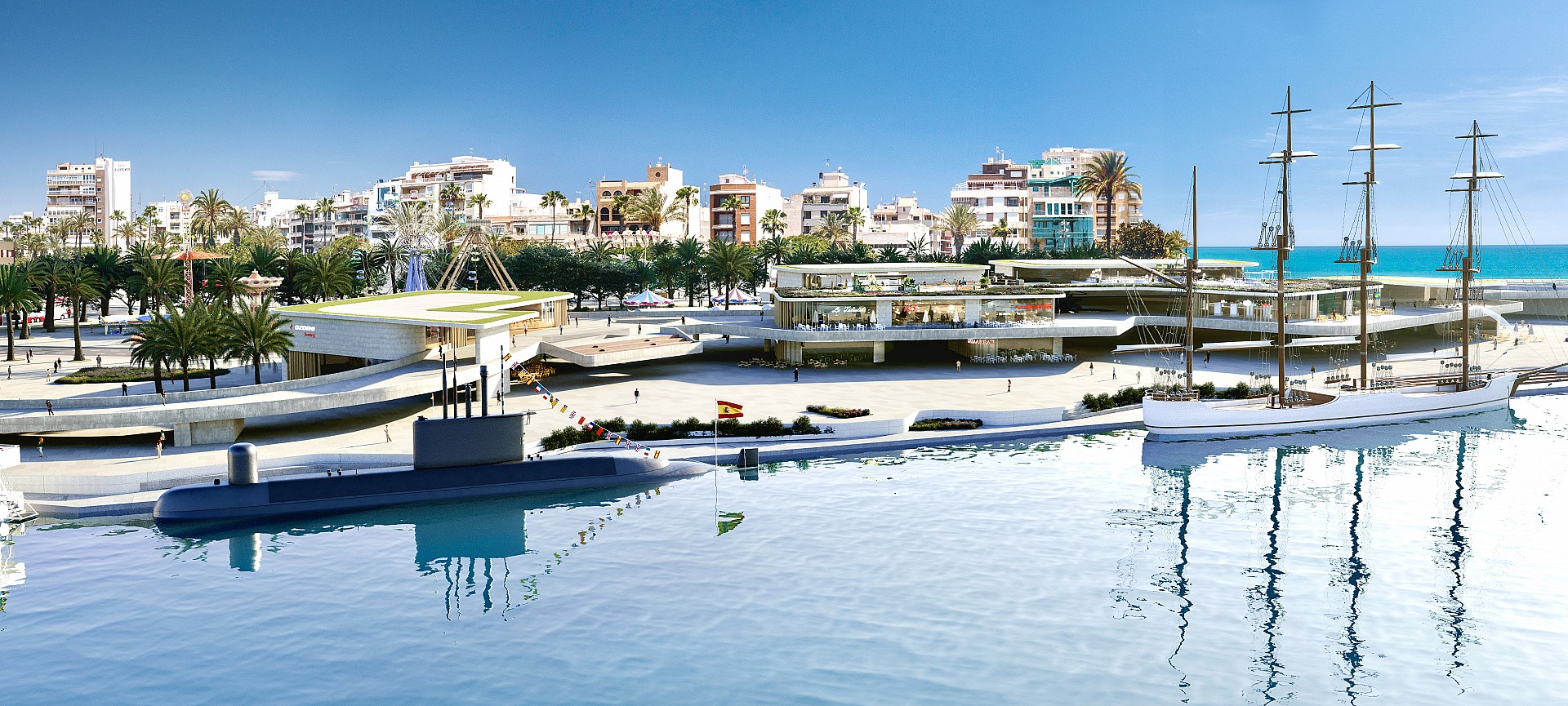
The Port of Torrevieja stands at the centre of a broader phase of renewal. The city is working on a reorganisation of the area between the town centre and the sea, with the aim of strengthening the connection to the waterfront and improving public space.
For generations, the harbour has been one of the defining areas of Torrevieja. Fishing activity, leisure boating, the promenade and the town centre meet here. It is a core zone of the city, and precisely for that reason it is receiving structural attention within current urban plans.
Bringing city and sea closer together
The redevelopment of the port area focuses on connectivity. Pedestrian areas along the waterfront are being adapted, existing infrastructure is modernised and the transition between the town centre and the sea is organised more clearly.
The Mínguez pier and the Levante breakwater form part of this approach. Areas that were long mainly functional are now being integrated more clearly into the public domain.
The objective is clear: a harbour environment that not only functions technically, but also serves as a fully integrated public space.
What do the announced plans include?
According to publicly communicated plans and project proposals concerning the port area, the redevelopment includes, among others, the following elements:
- The renovation and enhancement of the Mínguez pier.
- Improvements to the Levante breakwater and the seafront pedestrian connection.
- The creation of an elevated promenade strengthening the link between city and port.
- The development of a leisure and commercial area within the harbour zone.
- The construction of a new fish market with an adjoining public esplanade.
- The establishment of a multifunctional open space suitable for events and public activities.
- Technical infrastructure designed to support larger-scale events.
These elements form part of proposals presented by the relevant authorities. Concrete timing and execution will take place in phases and depend on further implementation.
More than a technical intervention
This development is not solely about infrastructure. When a city intervenes in its port area, it inevitably touches upon its identity.
In addition to the harbour works, attention is also being given to green areas, recreational spaces and public meeting points. Within the broader urban planning framework, quality of life and accessibility play a central role.
The historical role of the port
The Port of Torrevieja is closely linked to the city's history. Torrevieja developed as a salt and fishing port, and that maritime character remains visible today.
The surrounding salt lakes and traditional fishing activity have shaped the city. The current redevelopment seeks to integrate this heritage into a contemporary framework rather than replace it.
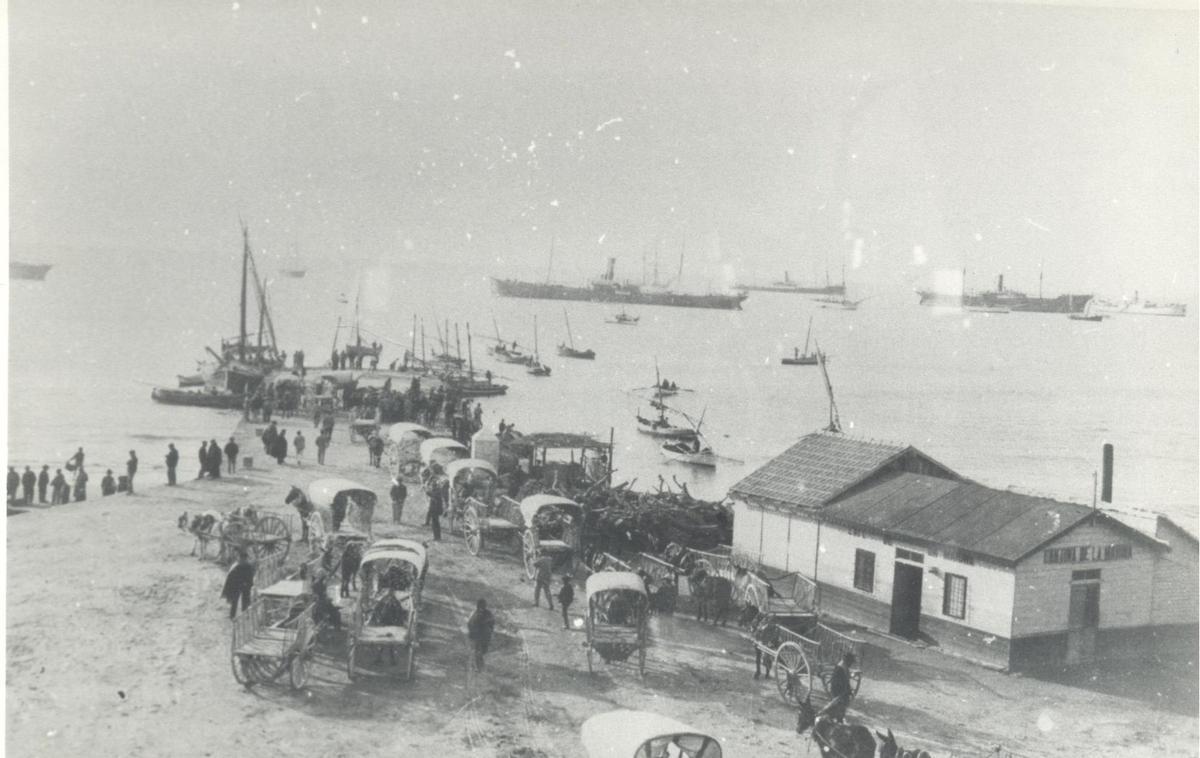
Historical photograph of the pier in Torrevieja. Source: A. Darblade – Collection Francisco Sala Aniorte.
The promenade as a connecting axis
The seafront promenade has long been one of Torrevieja’s most important public spaces. The port redevelopment connects directly to this area.
A clearer transition between town centre, promenade and harbour strengthens the urban structure of the city.
Public investment and urban vision
The port investments form part of a broader urban development vision. Torrevieja positions itself as a coastal municipality committed to quality of life and structural modernisation.
Official communications refer to a long-term strategy in which public space and urban cohesion play a central role.
Torrevieja within Costa Blanca South
Torrevieja remains one of the best-known coastal municipalities for Belgian and Dutch buyers on the Costa Blanca. Accessibility via Alicante, the climate and the wide range of services make it attractive for long stays or permanent living by the sea.
When a city invests in its core zones and public spaces, this influences its residential appeal and the experience of the coastline.
Our presence in Torrevieja and other regions
In Costa Blanca South and other sought-after Spanish regions, we work with Dutch-speaking area managers who live and operate locally. Nils, Frederik and Steffi closely follow regional developments.
We are active throughout the Costa Blanca, Costa del Sol, Costa Cálida, Costa de Almería, as well as the Balearic and Canary Islands.
Buying property in Spain differs from Belgium or the Netherlands. The Spanish notary’s role is more limited and does not include verification of building permits, debts or cadastral registration.
We provide full A-to-Z guidance in transparency and in your own language. Projects are carefully screened for permits, bank guarantees, reliability and quality of finish.
We consciously choose a long-term vision. A satisfied client is more important to us than a quick sale.